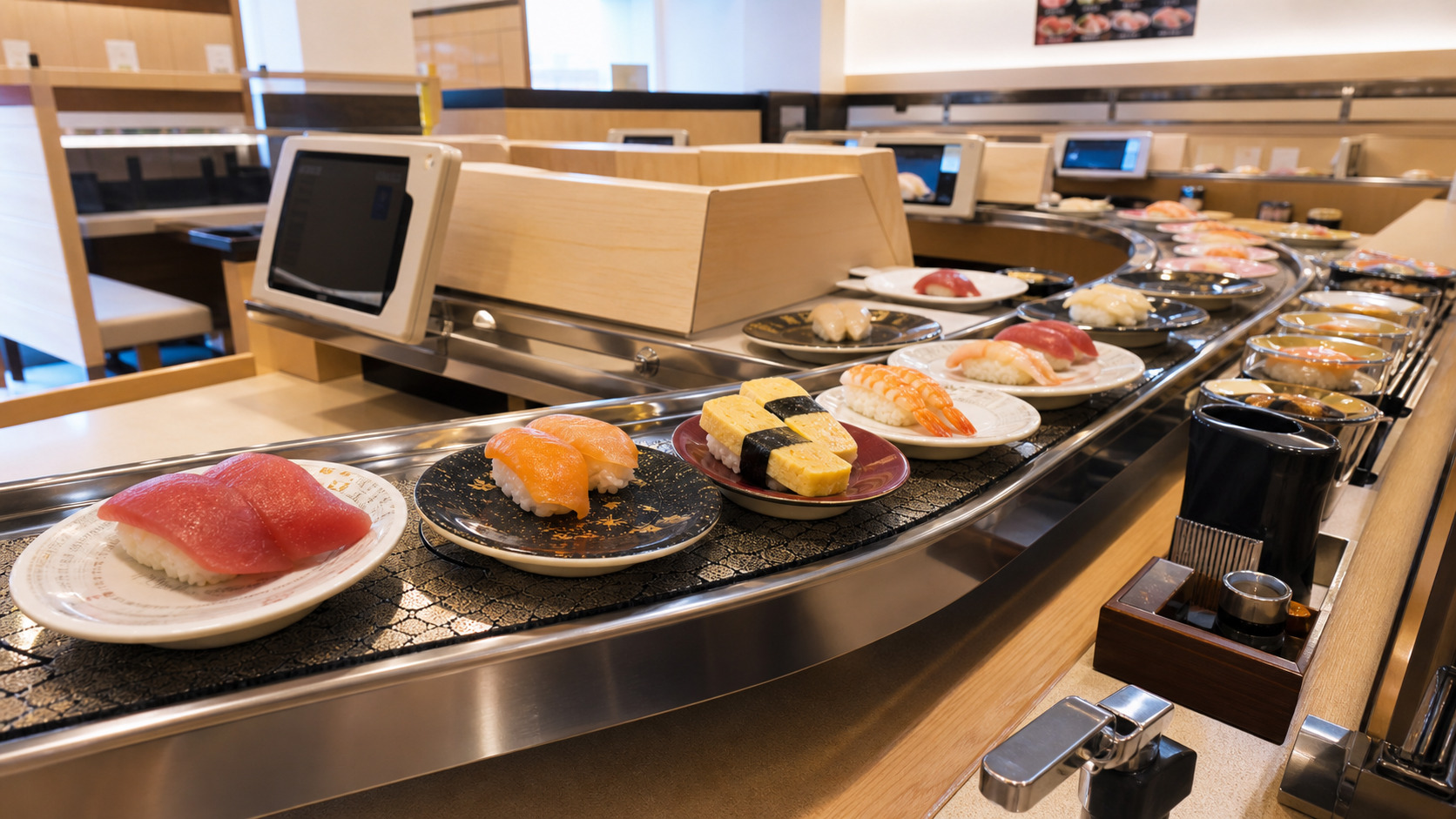
Conveyor belt sushi — kaiten-zushi — is one of the easiest, cheapest, and most genuinely fun meals to have in Japan, and also one of the most confusing the first time you sit down without knowing the system. Plates circle past on a belt, a touchscreen appears at your seat, and occasionally a plate arrives on its own miniature bullet train. None of it is explained in English at most locations, so here’s the actual rundown.
The two ways to get food
Modern kaiten-zushi restaurants usually run on a hybrid system:
- Grab-and-go from the belt — take any plate that catches your eye as it circles past. No need to flag anyone down.
- Order from the touchscreen — most chains now have a tablet at every seat (often with an English option) where you order specific items directly. These usually arrive on a separate fast lane, sometimes literally riding in on a small toy train or dedicated express belt, and appear right in front of your seat.
The touchscreen exists because the belt-only system means popular items get scooped up before they reach you — ordering directly guarantees you actually get what you want, fresh.
How pricing and billing work
Plates are color- or pattern-coded by price tier, usually ranging from about ¥110 to ¥500+ per plate (two pieces per plate is standard). At the end of the meal, staff either count your stacked plates or the system tracks everything automatically via a sensor built into the plates themselves — some chains now handle checkout entirely at a self-service kiosk, no verbal interaction required at all.
This makes kaiten-zushi one of the more approachable meals in Japan for travelers who are self-conscious about the language barrier — you can order, eat, and pay with almost no spoken Japanese needed.
What to actually order if you’re unsure
- Salmon (sake) and tuna (maguro) are the safest, most universally liked starting points
- Tamago (sweet egg omelet) is a good non-fish option and a genuine local favorite, not just a kids’ dish
- Corn mayo or other non-traditional rolls show up more often than expected and are worth trying if you want something less classic
- Look for a soy sauce and pickled ginger station near your seat — refills are self-serve, and the tea is usually free, made by mixing hot water (often a tap right at the table) with powdered green tea in your cup
Practical notes
- Reservations: Most locations are walk-in, though popular branches in busy areas can have a short wait during lunch and dinner rush
- Cost: A satisfying meal typically runs ¥1,500–2,500 per person, making it one of the better value meals in any major Japanese city
- Chains to look for: Sushiro, Kura Sushi, and Hama-zushi are the largest nationwide chains and a safe bet in most cities
Worth seeking out?
Yes — kaiten-zushi is that rare combination of genuinely good food, low cost, and an experience that’s fun in itself, regardless of how much sushi you’ve had before. It’s an easy meal to build into any Japan itinerary, and one of the least intimidating ways to eat well without a reservation or a translator.