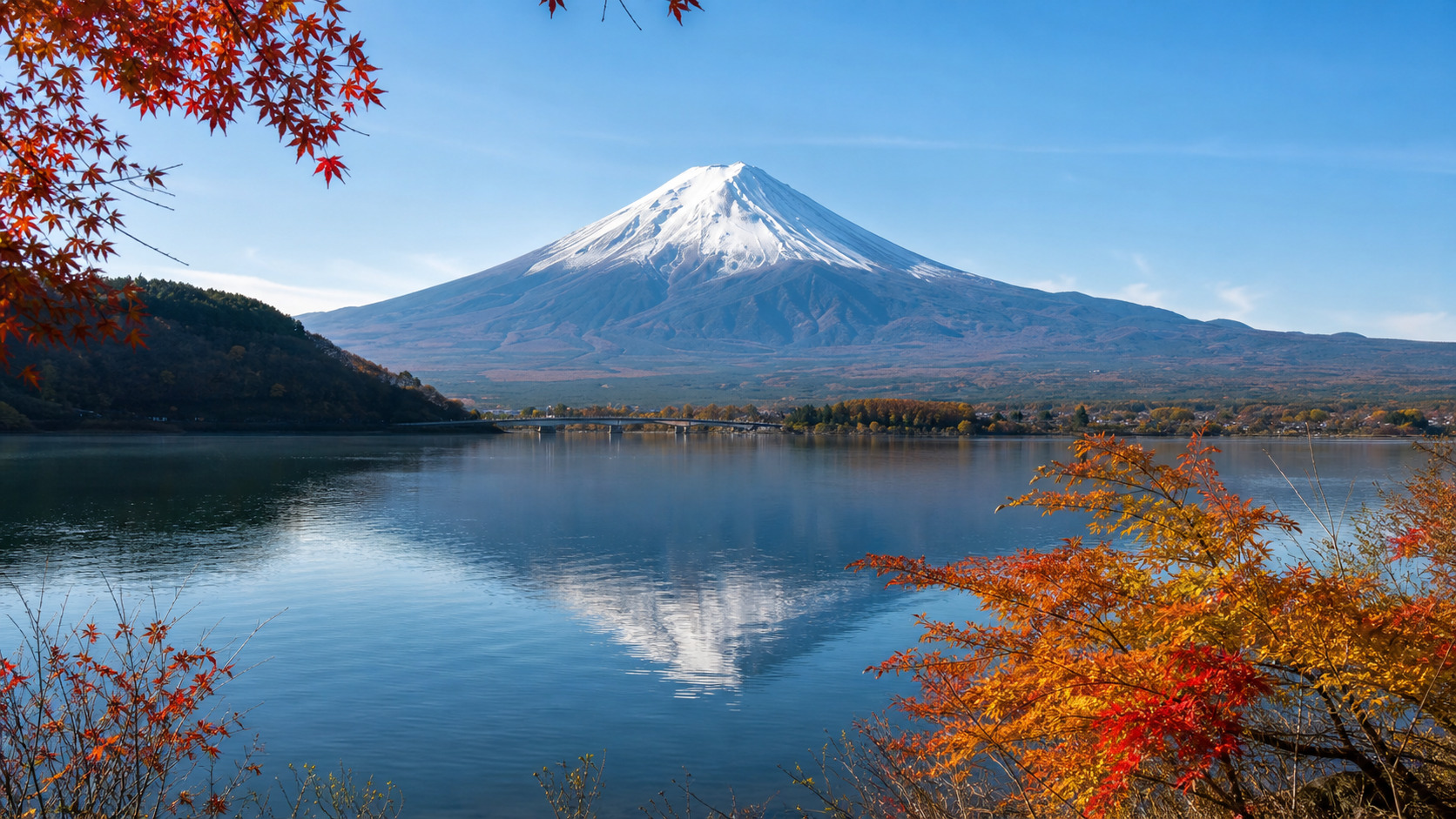
Mount Fuji is Japan’s most recognizable landmark, and also one of its most frequently invisible ones. It’s shy — hazy summer air and cloud cover hide the summit far more often than the postcards suggest, which catches a lot of visitors off guard when they plan a single day around seeing it.
When you’re actually likely to see it
Fuji’s visibility follows a clear seasonal pattern:
- Winter (December–February) is the most reliable window — cold, dry air and low humidity mean clear mornings are common, and the snow-capped peak is at its most photogenic
- Autumn (October–November) is a close second, with good visibility odds and the bonus of fall foliage in the foreground at spots like the Fuji Five Lakes
- Summer (June–August) is the least reliable season — humidity and haze frequently obscure the mountain by mid-morning, even on days that look clear at sea level
- Regardless of season, early morning (before 9–10am) is consistently the best window before daytime haze builds up
Where to see it
- Lake Kawaguchiko — the most popular of the Fuji Five Lakes, with classic reflection shots of Fuji over the water and easy access from Tokyo (about 2 hours by direct bus)
- Chureito Pagoda — a five-story pagoda near Fujiyoshida with Fuji framed behind it; one of the most photographed single viewpoints in Japan, especially with cherry blossoms or autumn leaves in frame
- Hakone — further from Fuji itself but combines lake, hot spring, and mountain views, with the Hakone Ropeway offering elevated sightlines on a clear day
- Shinkansen between Tokyo and Nagoya — a genuinely underrated option; the bullet train passes close enough for a clear-day view right from your seat, no detour required
If you’d rather not deal with train transfers and bus schedules, a Mount Fuji day tour from Tokyo covers the main viewpoints in a single day trip.
This article contains an affiliate link. If you book through it, we may earn a small commission at no extra cost to you.
Actually climbing it
The official climbing season is short — early July to early September — and outside that window the mountain huts, trail markers, and safety infrastructure aren’t operating, so climbing isn’t recommended even if the weather looks fine. Within season, most climbers do an overnight ascent, timing the final push to reach the summit for sunrise (goraiko). It’s a long, cold, genuinely strenuous night hike, not a casual walk — worth researching properly rather than deciding on a whim.
Practical notes
- Don’t build a whole day around it. Treat a clear Fuji view as a bonus, not a guarantee, and have a backup plan for the area you’re visiting regardless
- Check live webcams the morning of your visit — several Fuji viewpoint webcams are publicly available and are more reliable than a weather forecast for same-day visibility
- Trains and buses to the Fuji Five Lakes area get busy on weekends and during peak foliage/sakura weeks; an early departure helps on both crowds and visibility odds
Worth planning around?
If you’re visiting in winter or autumn, absolutely — build in a morning at Kawaguchiko or Chureito Pagoda and the odds are genuinely in your favor. In summer, treat it as a pleasant surprise rather than the centerpiece of your itinerary, and you won’t be disappointed either way.