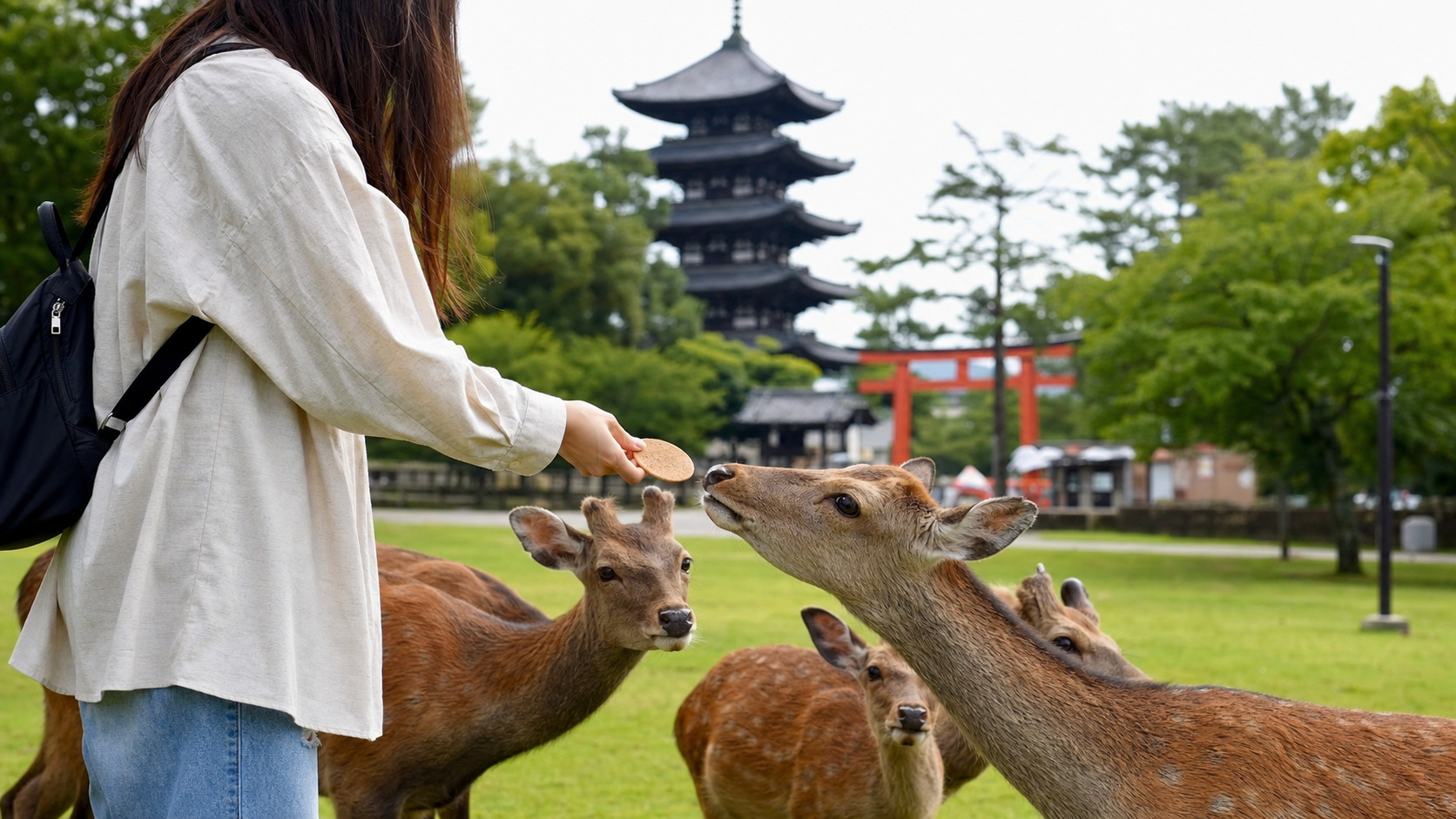
Nara Park is home to over a thousand wild sika deer that wander freely among the temples, gardens, and open lawns — and have done so for so long that they’re considered messengers of the gods in local Shinto tradition. They’re famous for bowing their heads before being handed a rice cracker, which is either the most charming thing you’ll see in Japan or a mildly aggressive negotiation tactic, depending on how many crackers you’re holding.
The bowing is real (mostly)
Deer that have learned the cracker routine will genuinely dip their heads when a visitor holds one up — it’s a learned behavior reinforced over generations, not a trained trick performed on command. Not every deer does it, and a deer with no crackers in sight has no reason to bow to anyone.
A word of actual caution: these are wild animals, not park mascots. During rutting season (autumn) and fawning season (late spring/early summer), some deer can be more defensive, and deer in general will nudge, nibble clothing, or headbutt if they think you’re withholding a cracker. Buy the crackers from the official stalls (labeled shika senbei), hold them clearly visible, and hand them over promptly rather than teasing.
What’s actually in the park
Nara Park isn’t just a deer encounter — it’s the connecting green space between several of Japan’s most significant historic sites:
- Todai-ji Temple — home to one of the largest bronze Buddha statues in the world, housed in what was for centuries the largest wooden building on Earth
- Kasuga Taisha — a shrine famous for its thousands of stone and bronze lanterns lining the approach through the forest
- Kofuku-ji — a five-story pagoda that’s one of the most recognizable silhouettes in Nara
Most of these sit within easy walking distance of each other and the deer-populated lawns, making Nara an easy full or half-day trip built around wildlife and temples together.
Getting there
Nara is a straightforward day trip from Kyoto (about 45 minutes by train) or Osaka (about 40 minutes), making it easy to combine with a Kansai-region itinerary rather than requiring an overnight stay. If you’d rather not sort out trains and transfers yourself, a guided Kyoto, Nara & Arashiyama day tour covers deer feeding at Nara Park alongside the Arashiyama train and bamboo grove, with a local guide.
This article contains an affiliate link. If you book through it, we may earn a small commission at no extra cost to you.
Practical notes
- Cracker cost: A small stack of shika senbei costs a few hundred yen from the green-uniformed vendors around the park
- Deer etiquette: Don’t feed deer anything other than the official crackers — human food can genuinely harm them, and park signage asks visitors not to
- Best time: Early morning has fewer crowds and calmer deer; midday on weekends means both the park and the deer are dealing with a lot of visitors at once
- Season: Spring and autumn give you deer plus cherry blossoms or fall color around the temples; summer is green and lush but warmer for walking between sites
Worth the day trip?
Easily — Nara delivers one of the more surreal, genuinely joyful travel moments in Japan (a wild animal bowing to you for a cracker), wrapped around some of the country’s most important historic temples, all within a half-day trip from Kyoto or Osaka.