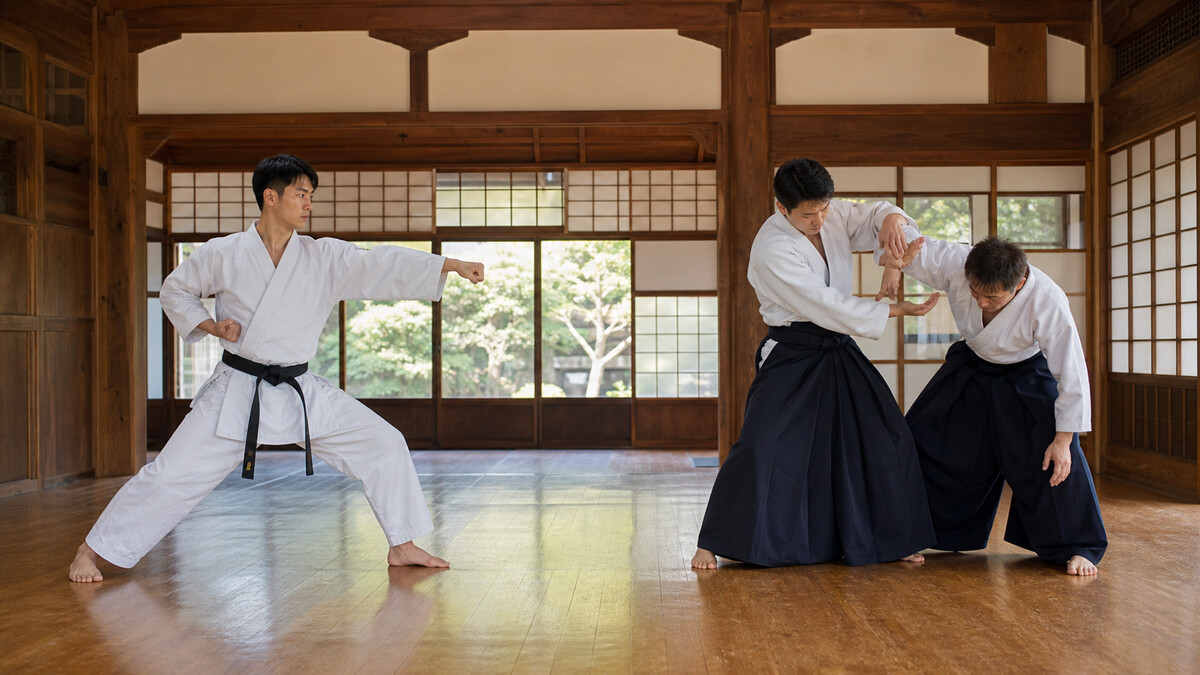
The short version: pick karate if you want striking and a clear belt-ranking structure, judo if you want grappling and full-contact sparring from early on, and aikido if you’re more interested in technique and control than competition. All three are legitimate, historically rooted Japanese martial arts, but they train completely different skill sets and attract different kinds of practitioners — the “which one is best” question usually has less to do with the art itself and more to do with what you actually want out of training.
Karate: striking, structure, and visible progress
Karate is a striking art — punches, kicks, knee strikes, and blocks — usually trained through repeated forms (kata) alongside sparring (kumite). Its belt-ranking system is widely known and gives beginners a clear sense of progress, which is part of why it’s often the first martial art people think of. Karate schools vary a lot in style (Shotokan, Goju-Ryu, Kyokushin, and others), and the amount of full-contact sparring differs significantly between them, so it’s worth asking about a specific dojo’s approach before assuming what “karate” will feel like.
Judo: grappling, throws, and sparring from day one
Judo is a grappling art built around throws, pins, and submissions rather than striking. Unlike some traditional martial arts, judo emphasizes live, resistant sparring (randori) relatively early in training, which means beginners get a realistic sense of whether a technique actually works against a resisting opponent much sooner than in more form-focused arts. It’s also an Olympic sport, which gives it a strong competitive structure if that’s something you’re looking for.
Aikido: technique, control, and redirecting force
Aikido focuses on using an attacker’s own momentum against them — joint locks, throws, and redirection rather than direct force-on-force striking or grappling. It’s generally less competition-oriented than karate or judo; most aikido schools don’t hold tournaments in the way karate and judo do, and training partners typically cooperate rather than fully resist, which makes it attractive to people more interested in technique and philosophy than sparring intensity.
Side-by-side comparison
| Karate | Judo | Aikido | |
|---|---|---|---|
| Core skill | Striking | Grappling, throws | Joint locks, redirection |
| Sparring style | Semi-contact to full-contact (varies by style) | Live resistant sparring (randori) | Cooperative practice, minimal resistance |
| Competition scene | Common, style-dependent | Strong, Olympic sport | Rare |
| Good for | Clear progression, striking fundamentals | Realistic grappling experience early on | Technique-focused, lower-impact training |
How to actually decide
- If you want to spar hard and test techniques against resistance quickly, judo delivers that faster than most traditional martial arts.
- If visible progress through belts and a striking foundation matters to you, karate’s structure is built around exactly that.
- If you’re drawn more to precision and technique than competition or contact, aikido is worth trying — but go in knowing it’s less about sparring intensity.
None of these are mutually exclusive long-term — many practitioners eventually train in more than one. For a first martial art, though, picking based on what you actually want to get out of training beats picking based on which name is most familiar.
Bottom line
Karate, judo, and aikido are all legitimate, well-established Japanese martial arts, but they solve different problems. Karate gives you striking and structure, judo gives you grappling and live sparring, and aikido gives you technique-focused training with less contact. The “right” one is the one that matches what you actually want from training — not the one you’ve simply heard of the most.
FAQ
Which is easiest for a complete beginner to start? All three are beginner-friendly, but karate’s structured belt system tends to give newcomers the clearest sense of progress early on.
Is judo dangerous for beginners? Judo involves throws and controlled falls, so proper breakfall (ukemi) training is typically taught first, before live sparring begins. Reputable dojos prioritize this safety foundation before increasing sparring intensity.
Can I switch between martial arts later? Yes, and it’s common. Many practitioners start with one art and add others later — skills from striking, grappling, and technique-focused arts tend to complement each other rather than conflict.
This post contains affiliate links. If you buy through a link on this page, we may earn a commission at no extra cost to you. This does not affect our recommendations.