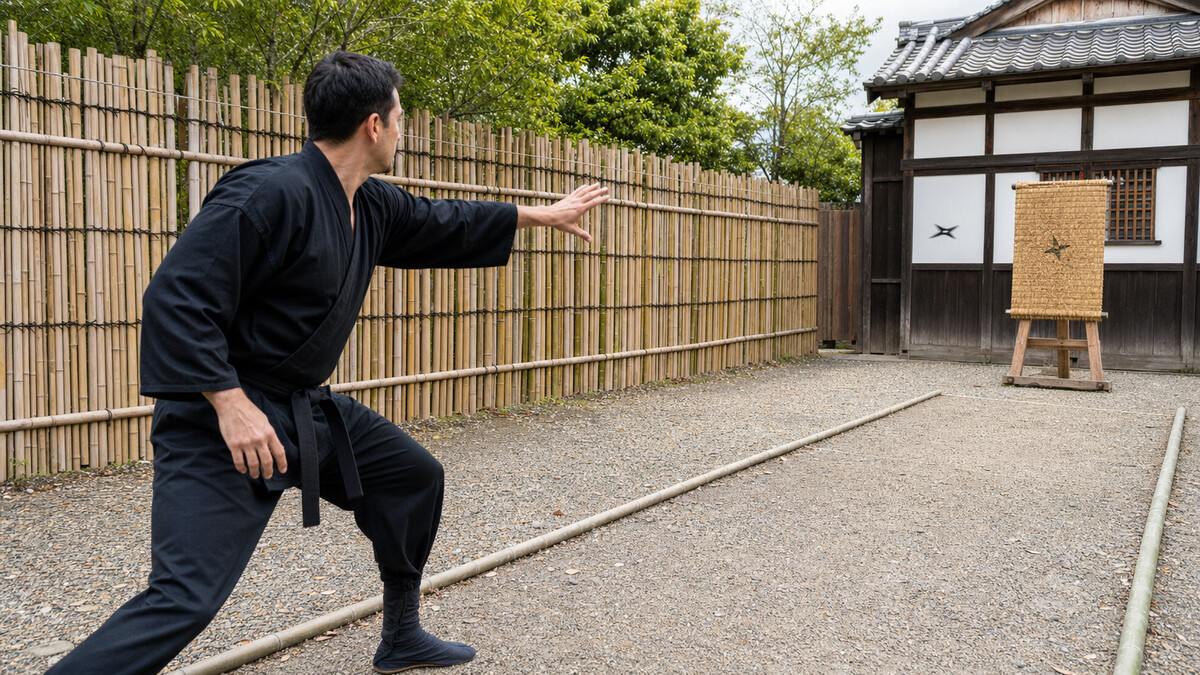
Short answer: yes, but almost none of it is the historical ninjutsu you’re picturing. Most “ninja training” experiences marketed to tourists are one- to two-hour themed activities — shuriken (throwing star) practice, costume rental, basic stealth-walking drills — run for entertainment rather than martial lineage. Genuine, lineage-based ninjutsu training exists in Japan, but it’s a different thing entirely: a long-term martial art commitment, not a single afternoon activity.
What the tourist “ninja experience” actually is
Most ninja experiences bookable as a day activity — commonly found in Kyoto, Tokyo, and Iga (the historical ninja region) — combine a few common elements: shuriken throwing at a target, a basic obstacle or stealth-movement course, weapon handling with blunted tools, and photo opportunities in rental ninja costumes. These are built for visitors with zero martial arts background and typically run 60–90 minutes. They’re genuinely fun, but they’re closer to a themed activity center than a martial arts class.
What actual ninjutsu training looks like
Historical ninjutsu (properly, ninpo or shinobi-no-jutsu) was a set of unconventional combat, espionage, and survival skills developed by specific clans, most famously in the Iga and Koga regions. Modern lineage-based schools — the best-known internationally is the Bujinkan system taught from Noda City near Tokyo — teach ninjutsu as a genuine martial art with grading ranks, ongoing instruction, and techniques drawn from historical taijutsu (unarmed combat) alongside weapons work. This is a serious, long-term commitment similar to any other martial art, not a single-session tourist activity.
Iga: the closest thing to “ninja origin tourism”
Iga (in Mie Prefecture) is one of the two historical centers of ninjutsu, and it leans into that history seriously rather than purely for entertainment. The Iga-ryu Ninja Museum includes a preserved ninja house with real hidden mechanisms — trap doors, hidden compartments, quick-escape panels — that were actually used historically, plus live demonstrations of authentic tool use. It’s still aimed at general visitors rather than martial artists, but it’s grounded in real regional history rather than a generic costume-and-shuriken package.
How to tell a themed activity from a serious training opportunity
| Signal | Themed tourist activity | Lineage-based training |
|---|---|---|
| Duration | Single session, 1–2 hours | Ongoing classes, weeks to years |
| Who teaches it | Activity staff, tourism-focused | Certified instructors within a specific lineage (e.g. Bujinkan) |
| What you learn | Shuriken throwing, costume, basic movement | Taijutsu, weapons, grading system, historical technique |
| Where to find it | Kyoto, Tokyo tourist districts, Iga | Bujinkan-affiliated dojos, primarily Noda City area |
If you’re after a fun, low-commitment Japan travel activity, the tourist version delivers exactly that. If you’re actually interested in ninjutsu as a martial art, you’ll want to look specifically for a lineage-affiliated dojo and treat it like starting any other martial art — with an expectation of ongoing training, not a single class.
Getting the most out of a short experience
- Book Iga over a generic city-center activity if history matters to you — the regional context makes the experience feel less like a costume rental and more like an actual place ninjutsu came from.
- Ask what’s included before booking. Shuriken-only sessions are common and much shorter than packages that include costume, obstacle course, and weapon demonstrations.
- Don’t expect combat training from a tourist session. Even the more serious tourist experiences are built around safe, simplified movements — they’re not a substitute for actual martial arts instruction.
Bottom line
A tourist ninja experience and real ninjutsu training are two different things wearing the same name. The tourist version is a genuinely fun, low-commitment activity best done in a historically grounded location like Iga. Actual ninjutsu training is a long-term martial art with real lineage, grading, and instructor requirements — worth pursuing separately if the tourist taste leaves you wanting more.
FAQ
Is Iga or Koga better for ninja tourism? Iga has more developed tourist infrastructure around its ninja history, including the Ninja Museum with its hidden-mechanism house. Koga has historical significance too, but fewer dedicated visitor attractions.
Can I actually learn real ninjutsu as a short-term visitor? Not meaningfully in a single session. Lineage-based schools like Bujinkan operate as ongoing martial arts training, similar to karate or judo — a single class gives you a taste, not competence.
Are the ninja tools used in tourist experiences real? Usually blunted or training versions for safety. Museums like the Iga-ryu Ninja Museum display and demonstrate authentic historical tools separately from the hands-on tourist activities.
This post contains affiliate links. If you buy through a link on this page, we may earn a commission at no extra cost to you. This does not affect our recommendations.