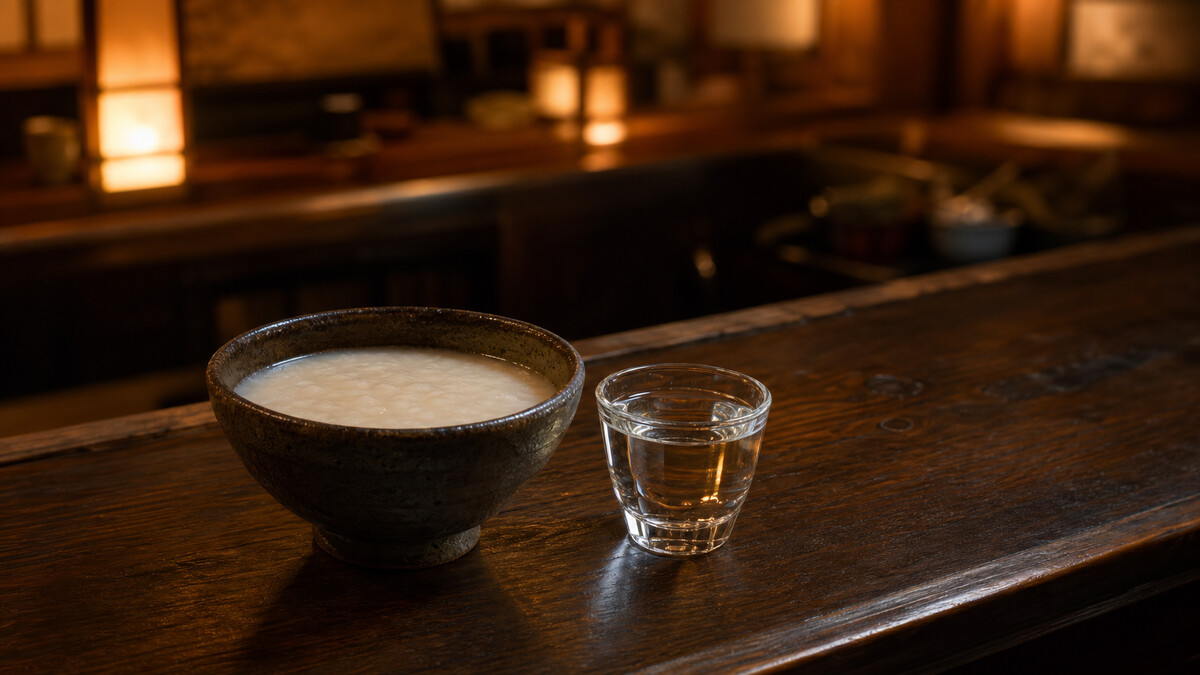
The short answer: doburoku is unfiltered sake — cloudy, thick, and often served in a bowl instead of a small cup. Regular sake (seishu) goes through a pressing and filtering step that separates the liquid from the leftover rice solids (kasu). Doburoku skips that step entirely, so the rice solids stay suspended in the liquid, giving it a thick, porridge-like texture that’s completely different from the clear sake most travelers already know.
How doburoku is actually made
Both doburoku and regular sake start the same way — steamed rice, koji mold, and yeast fermenting together. The difference happens at the very last step. Seishu (regular sake) is pressed through a cloth or filter to separate the clear liquid from the solid rice mash. Doburoku is bottled or served straight from the fermentation tank, solids and all, which is why it looks closer to a thin rice porridge than a clear spirit.
What it actually tastes like
Doburoku is generally sweeter, tangier, and more textured than filtered sake. The unfiltered rice particles add a slightly chewy, almost yogurt-like mouthfeel, and the flavor tends to be more overtly sweet-sour compared to the drier, cleaner profile of most seishu. Alcohol content is usually similar to sake, in the 6–17% range depending on the producer, though homemade and ceremonial versions can vary widely.
Why it’s harder to find than regular sake
Doburoku production was effectively restricted to licensed sake breweries in Japan for most of the 20th century, which is part of why it stayed a niche, often regional product rather than a mainstream export like filtered sake. A special zone system (doburoku tokku) introduced in the early 2000s allowed certain farms, inns, and small producers in designated regions to legally brew and sell it locally, which is why doburoku is still strongly associated with specific rural areas rather than being widely available nationwide.
Where travelers can actually try it
| Where | What to expect |
|---|---|
| Shirakawa-go region (Gifu) | Doburoku festivals in autumn, tied to shrine harvest rituals, with tastings available around festival dates |
| Rural inns (minshuku) in doburoku tokku zones | Small-batch, house-brewed doburoku served alongside home-style meals |
| Sake breweries offering tours | Some breweries that also produce seishu will offer a doburoku tasting as part of a tour, though it’s less common than seishu tastings |
| Specialty izakaya in larger cities | A small but growing number stock bottled doburoku from regional producers |
Because doburoku is tied to specific regional producers rather than one dominant national brand, availability varies a lot by season and location — it’s worth checking ahead rather than assuming any given sake bar will carry it.
Doburoku vs. nigori sake: a common mix-up
Nigori sake is often confused with doburoku, but they’re not the same thing. Nigori is lightly filtered through a loose mesh, so some rice particles pass through and the sake stays cloudy — but it’s still a filtered product, just less filtered than clear seishu. Doburoku skips filtering entirely. If a bottle looks cloudy but pours smoothly with fine, even sediment, it’s likely nigori. If it’s thick enough to need a spoon, it’s doburoku.
Bottom line
Doburoku is sake’s unfiltered, rustic cousin — thicker, sweeter, and tied to specific regions rather than a single national brand. If you only try filtered sake and nigori on a Japan trip, you’re missing a genuinely different drinking experience that most visitors never encounter. Seeking it out at a regional festival or a doburoku tokku inn is worth the extra effort.
FAQ
Is doburoku stronger than regular sake? Not necessarily. Alcohol content is usually comparable to regular sake, though it varies by producer — the main difference is texture and sweetness, not strength.
Can I buy doburoku outside Japan? It’s uncommon. Because production is tied to small regional producers rather than large export-focused breweries, doburoku is far less available internationally than mainstream sake brands.
Is doburoku the same as amazake? No. Amazake is typically low-alcohol or non-alcoholic and much sweeter, closer to a rice porridge drink. Doburoku is a fully fermented alcoholic beverage with a flavor profile closer to sake.
This post contains affiliate links. If you buy through a link on this page, we may earn a commission at no extra cost to you. This does not affect our recommendations.