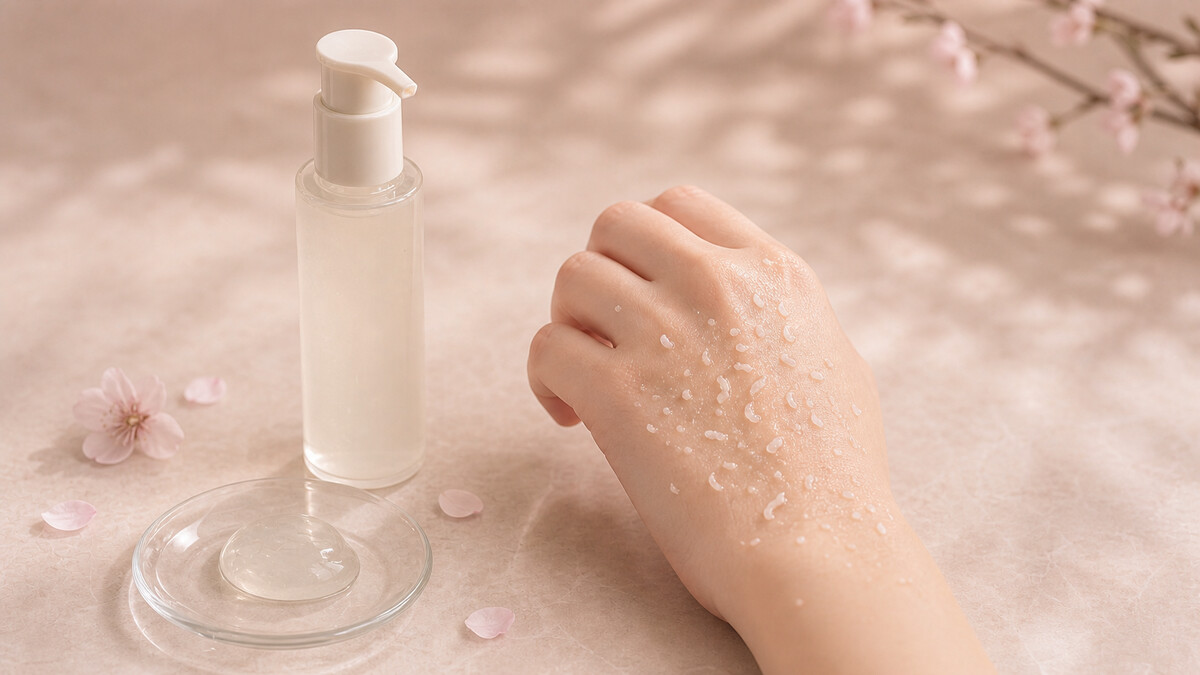
A Japanese peeling gel (gommage) exfoliates through a genuinely different mechanism than a physical scrub or a chemical acid exfoliant — it’s a gel that reacts with dead skin cells on contact, visibly balling up into small rolls of debris as you massage it, without abrasive particles or acids doing the work. Watching visible “peel” appear on your skin is the entire appeal and the reason this category has such a devoted following — it makes exfoliation feel immediately tangible in a way a rinse-off scrub or an overnight acid treatment doesn’t.
How it actually works (it’s not real “peeling”)
Despite the name, gommage gel isn’t dissolving or aggressively stripping skin the way some marketing language implies. The gel forms a light film that binds loosely to dead surface skin cells; light massage causes this film to roll off, carrying the dead cells with it — a mechanical action, but a far gentler one than a physical scrub with abrasive grains. This is why gommage is generally considered suitable for more frequent use than a granular scrub, without the same risk of micro-tearing skin.
Cure — the name most associated with the category
Cure by Toyo Aqua Gel is widely considered the benchmark product in this category — water-based, minimal-ingredient, and dermatologist-tested, positioned specifically for sensitive skin that can’t tolerate physical scrubs or stronger acid exfoliants. It’s also usable on the body, not just the face, which is a genuine practical advantage over most face-only exfoliating products.
Who this is a better fit for than acids or scrubs
- Sensitive or reactive skin that reacts poorly to physical scrub particles or the tingling/irritation some acid exfoliants cause
- Anyone who wants a visual, tactile confirmation that exfoliation is happening — a real motivator for actually staying consistent with an exfoliation routine
- Skin that’s already using actives elsewhere (retinoids, vitamin C) where adding a strong acid exfoliant on top risks over-treating the skin barrier
Where it falls short compared to acids
Gommage gels work on the visible surface layer and don’t offer the same depth of action as chemical exfoliants (AHA/BHA), which can also help with texture and congestion below the immediate surface. It’s a genuinely gentler tool, but “gentler” also means it’s not a direct substitute for acid exfoliation if that’s specifically what a skin concern calls for — the two can coexist in a routine rather than competing for the same slot.
FAQ: Japanese peeling gel
Is gommage gel actually exfoliating my skin, or is the “peeling” fake? It’s genuinely removing dead skin cells, just through gentle mechanical action (the gel binding to dead cells and rolling off) rather than abrasive particles or chemical dissolution — real exfoliation, just a gentler mechanism.
How often can I use a peeling gel? Generally more frequently than a physical scrub, since the mechanism is gentler — many people use gommage gel 2-3 times a week, though checking specific product guidance is worth doing since formulas vary.
Is peeling gel better than a chemical (AHA/BHA) exfoliant? Not universally better — it’s gentler and less likely to irritate sensitive skin, but chemical exfoliants offer a level of depth and targeted action gommage doesn’t match. Many routines use both for different purposes.
Can I use peeling gel on my body, not just my face? Many gommage gels, including Cure by Toyo, are formulated for both face and body use — a genuine advantage over most face-specific exfoliating products.