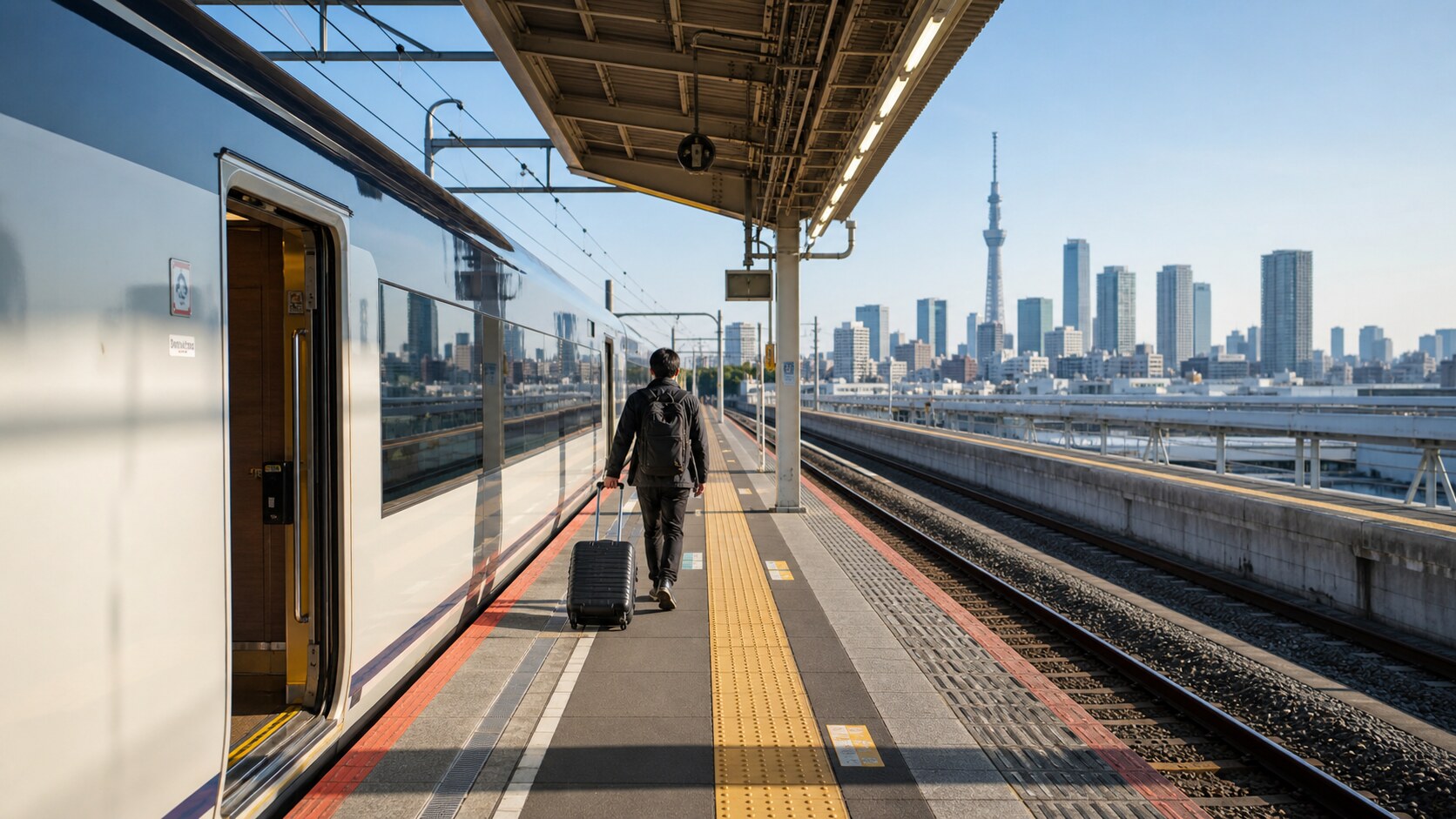
Haneda is roughly 15–30 minutes from central Tokyo; Narita is 40–70 minutes depending on what you take — and that gap matters more than any specific train choice. If your flight options let you choose, Haneda is the easier airport by a wide margin. If you’re landing at Narita regardless, the Keisei Skyliner is the fastest way in, and the Airport Bus is the cheapest, and the right pick genuinely depends on how much you’re carrying and how tired you’ll be.
From Haneda — the easy case
Haneda’s proximity to central Tokyo means the “best option” question barely matters. The Tokyo Monorail connects to Hamamatsucho in about 13 minutes, and the Keikyu Line runs directly into Shinagawa and beyond, both cheap and frequent. Unless you’re staying somewhere the monorail doesn’t conveniently reach, either option works without much research needed.
From Narita — where the real decision is
Narita is far enough out that the choice actually changes your day:
- Keisei Skyliner — the fastest option, reaching Nippori in about 36 minutes and Ueno in about 41. Costs more than the bus, but if you’re jet-lagged or traveling with kids, the time savings are worth it.
- Airport Bus (Tokyo Shuttle / The Access Narita) — the cheapest option at around ¥1,500 to Tokyo Station or Ginza, taking roughly 65–70 minutes. No train transfers, which matters if you’re hauling large luggage — buses load bags underneath, trains don’t.
- JR Narita Express (N’EX) — mid-priced, direct to major hubs like Tokyo Station, Shinjuku, and Shibuya without changing trains, which is the deciding factor if your hotel is near one of those stations specifically.
The luggage factor nobody mentions upfront
If you’re carrying large suitcases, the bus options from Narita are genuinely more comfortable than the train — no navigating stairs or platform gaps with a 23kg case. The Skyliner and N’EX both have luggage space, but during peak arrival times that space fills up, and standing in a train vestibule with bags for 40+ minutes after a long flight is worth planning around, not discovering.
What actually decides it
| Priority | Best pick (Narita) |
|---|---|
| Speed | Keisei Skyliner |
| Cost | Airport Bus |
| Fewer transfers, big luggage | Airport Bus or N’EX |
| Direct to Shinjuku/Shibuya | JR Narita Express |
Set up your IC card before you need it
Whichever option you take, having a Suica or Pasmo IC card ready before you leave the airport saves the first of many small frictions — tapping through ticket gates instead of buying individual paper tickets for every subsequent train and bus. Both Narita and Haneda have counters for this, but lines build up around peak arrival banks, so getting it early (or setting up a mobile version before landing) avoids a wait right when you’re least equipped to deal with one.
FAQ: Airport transfers to Tokyo
Is Haneda or Narita better for a first-time visitor? Haneda, if flight options allow it — it’s simply closer to central Tokyo, cutting 20–40 minutes off the transfer regardless of which train or bus you take.
What’s the fastest way from Narita to Tokyo? The Keisei Skyliner, reaching Nippori in about 36 minutes. It costs more than the bus or standard trains, but it’s the clear speed winner.
What’s the cheapest way from Narita to Tokyo? The Airport Bus (around ¥1,500), taking roughly 65–70 minutes to Tokyo Station or Ginza. It’s also the easiest option with large luggage since bags load underneath rather than needing to be carried through stations.
Should I buy a train ticket in advance or at the airport? For most options, buying at the airport counter or kiosk on arrival is simple and doesn’t require advance booking — but reserved seating on the Narita Express can sell out during peak holiday periods, so booking that specific train ahead is worth doing if your dates overlap with a busy season.