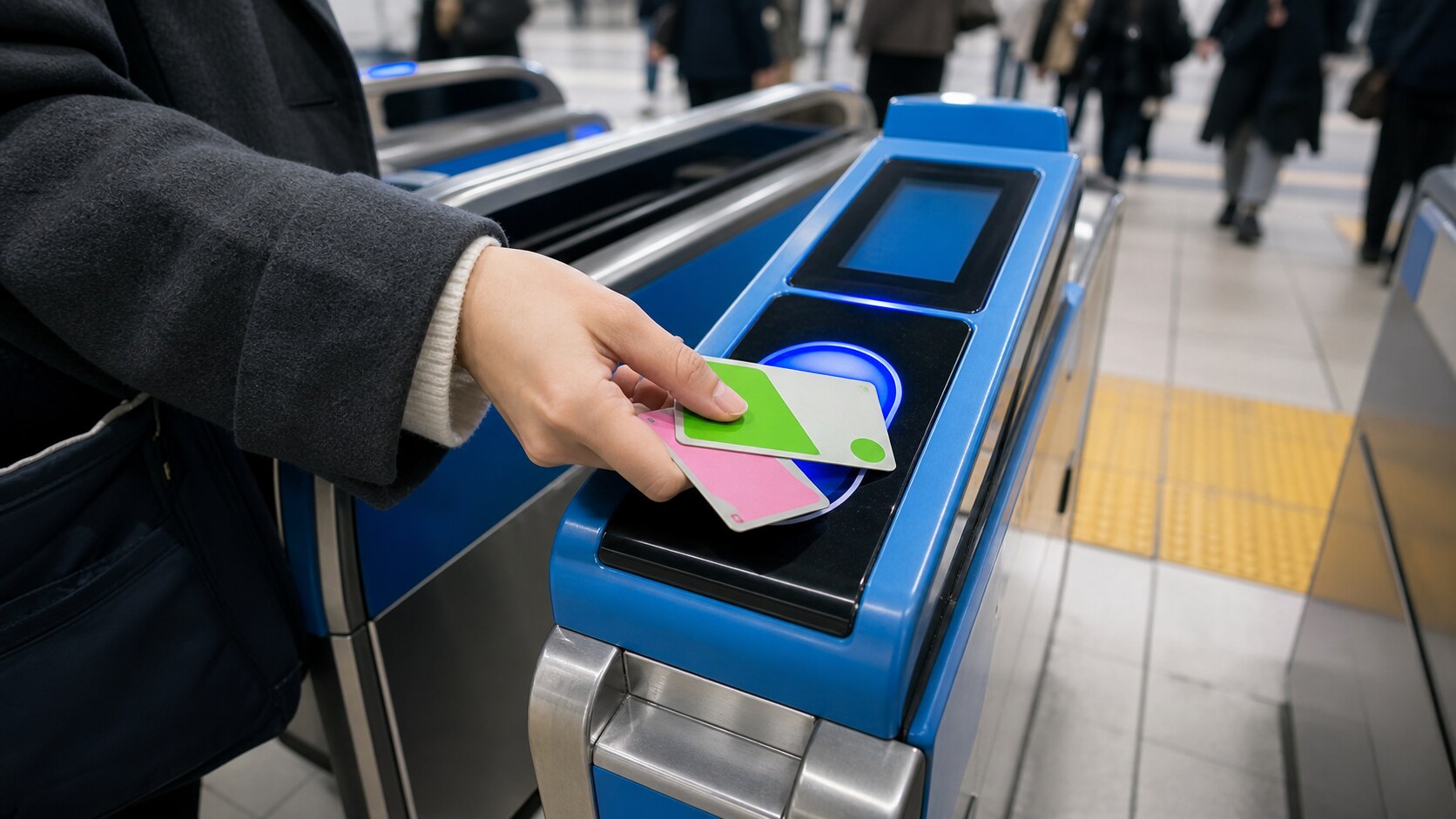
Suica and Pasmo work exactly the same way for a tourist — same trains, same convenience stores, same taxis — so “which one” barely matters. The decision that actually matters is physical card vs. mobile (Apple/Google Wallet). Going mobile skips the airport counter line entirely and lets you top up with a credit card already in your phone; a physical card is the safer default if you don’t have a compatible phone or just want something you can hand a kid without worrying about a lost device.
Why the Suica-vs-Pasmo question is mostly a non-issue
Suica is issued by JR East, Pasmo by the Tokyo private railways and buses — but both work interchangeably across nearly the entire Tokyo transit network, and both work nationwide at convenience stores, vending machines, and most transit systems in other major cities too. Picking one over the other based on “which is better” is solving a problem that doesn’t really exist for a visitor; picking based on which is easiest to obtain when and where you land is the more useful question.
The tourist-specific options in 2026
- Welcome Suica (physical) — no deposit, valid 28 days, available at JR East counters at Narita and Haneda. The straightforward physical-card default.
- Welcome Suica Mobile (iPhone app) — free, no deposit, valid 180 days (far longer than the physical card), and skips the airport counter entirely since it’s set up from your phone. The best option if you have a compatible iPhone.
- Tourist Pasmo — a newer equivalent option with similar no-deposit terms, issued through Pasmo’s own tourist channel.
- Standard Suica/Pasmo — regular cards (not tourist-specific) are back in stock as of 2025 after a prior chip shortage, and remain a fine option if the tourist-specific versions aren’t available when you land.
Mobile wallet is the move if your phone supports it
Both Suica and Pasmo can be added directly to Apple Wallet (iPhone) without downloading a separate app for basic use, and charged instantly with a credit card already saved in your Wallet. This is the single biggest time-saver available to tourists here — it means walking off the plane, adding the card in the few minutes before you’re even at immigration, and walking straight through a ticket gate on arrival with zero counter interaction. Android support varies more by region and card, so iPhone users have the smoother path here.
Where a physical card still makes more sense
- Traveling with kids who won’t be carrying a phone through gates independently
- Backup phones or older Android devices without reliable NFC/Wallet support
- Wanting a physical souvenir card, which is a genuinely common reason people still choose one
What actually happens if you get this “wrong”
Nothing serious. Both card types work at the same gates, same stores, same vending machines. The only real downside of choosing suboptimally is time — standing in an airport counter line for a physical card you could’ve set up on your phone before boarding, or discovering after landing that your specific phone model doesn’t support mobile Wallet setup and now needs the counter after all. Neither mistake costs money; both cost a bit of time on day one.
FAQ: Suica and Pasmo for tourists
Do I need both Suica and Pasmo? No. Either one works across virtually the entire network you’ll use as a tourist. Having both adds no functional benefit.
Can I use Suica or Pasmo outside Tokyo? Yes, for the most part. Both work in most other major Japanese cities’ transit systems and at convenience stores nationwide, with a small number of regional exceptions.
Is mobile Suica better than a physical card? For iPhone users, generally yes — it skips the airport counter, tops up instantly by card, and lasts 180 days versus 28 for the physical Welcome Suica. Physical cards remain the simpler choice for kids or unsupported phones.
What happens to leftover balance when I leave Japan? Physical cards can be refunded (minus a small handling fee in some cases) at a station counter before departure, though this isn’t always worth the line for a small balance. Many travelers simply keep the card for a return trip instead.