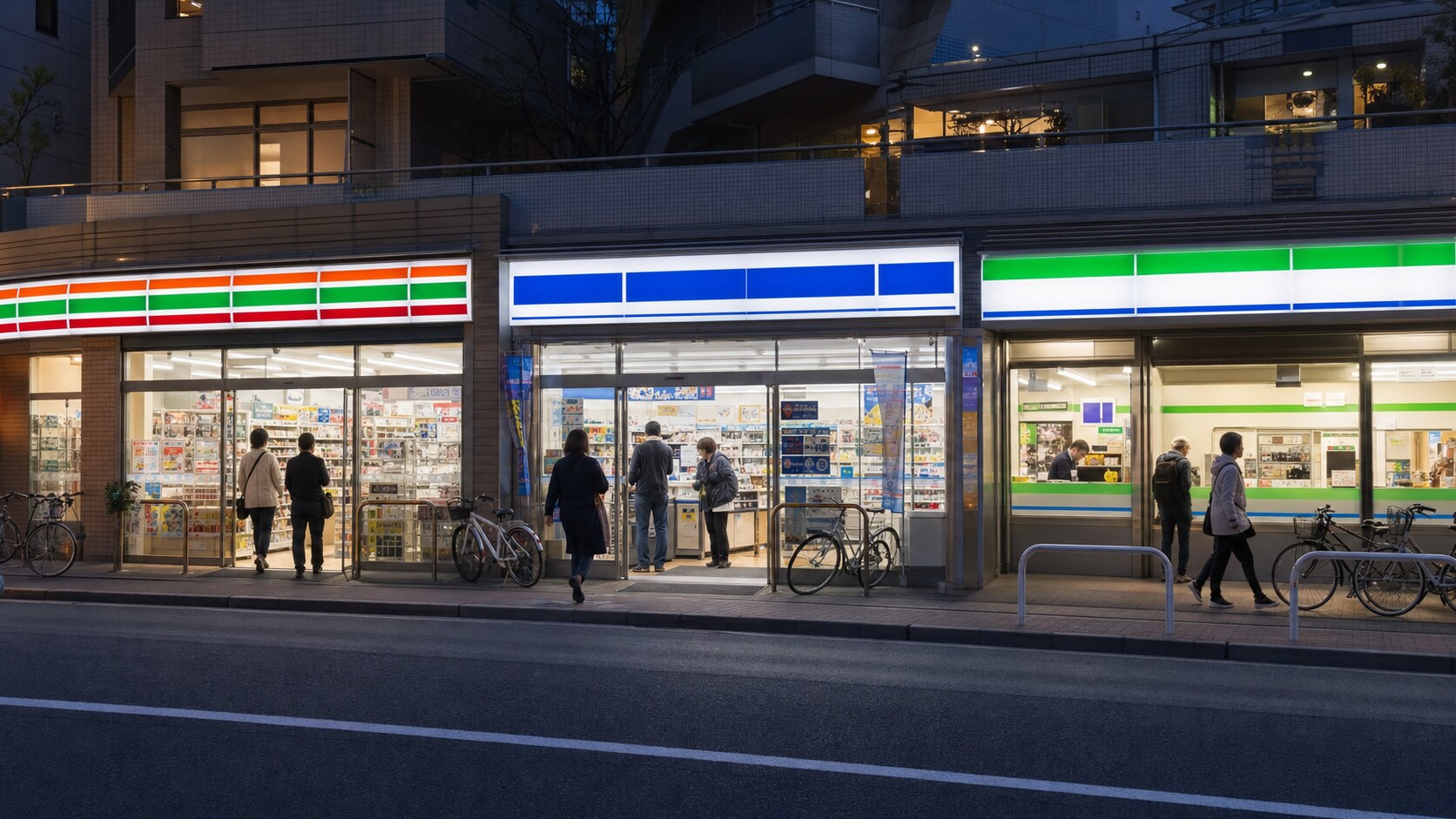
A Japanese konbini isn’t a snacks-and-gas-station pit stop — it’s closer to a mini bank branch, post office, and restaurant combined, and treating it as “just a convenience store” means missing most of what it actually does. With one for roughly every 2,000 people and 24-hour hours as the norm, konbini function as genuine daily infrastructure in Japan, not a budget fallback option. Skipping them because “it’s just a convenience store” is one of the more common first-timer misses.
The big three, and what each is actually best for
Roughly 95% of Japan’s konbini belong to three chains, and each has a real, locally-understood specialty rather than being interchangeable:
- 7-Eleven — the largest chain by store count, and generally considered the strongest for sandwiches and their egg salad sando specifically has a small cult following among visitors.
- Lawson — the go-to for bread and pastries: melon pan, curry bread, and an entire aisle of sweets that other chains don’t match.
- FamilyMart — widely regarded as having the best onigiri (rice balls), which matters more than it sounds like it should, since onigiri is a genuine daily staple, not a novelty snack.
Knowing this in advance changes how you use them — instead of grabbing whatever’s closest, it’s worth a short walk to the right chain for what you actually want.
It’s not just food
Konbini in Japan commonly handle bill payments, ATM withdrawals (including foreign cards, which matters directly for travelers — see this site’s packing list guide for more on cash strategy), package pickup and shipping, concert and event ticket purchases, and photocopying or printing. For a traveler, the ATM and payment functions alone make a konbini worth knowing how to use beyond just buying a drink.
What to actually try
- Onigiri (rice balls) — cheap, fast, and a genuine window into everyday Japanese eating, not a tourist novelty
- Regional limited-edition items — flavors change by prefecture (Hokkaido melon soft serve, Kyoto matcha desserts, Okinawa sweet potato treats), and hunting these down while traveling is a small, low-effort way to eat something genuinely local
- Hot food from the counter (oden in colder months, fried chicken year-round) — pointing and asking staff to heat or bag something is completely normal and expected, not an inconvenience to them
Basic etiquette that avoids an awkward moment
Eating while walking is generally frowned upon in Japan more broadly, and most konbini either have a small standing counter inside or expect you to consume your item just outside the door rather than while walking down the street. Staff will often ask if you want something heated (a quick nod or “hai” works fine even without much Japanese) — this is routine, not something requiring a full conversation.
FAQ: Japanese convenience stores
Is 7-Eleven, Lawson, or FamilyMart the best? None is universally “best” — each has a real specialty (7-Eleven for sandwiches, Lawson for pastries, FamilyMart for onigiri), so the right one depends on what you’re after in the moment.
Can I withdraw cash from a konbini ATM with a foreign card? Yes — 7-Eleven ATMs in particular are known for reliably accepting foreign-issued cards, making them one of the most consistent cash-access points for travelers.
Is it okay to just browse a konbini without buying anything? Yes, this is completely normal — konbini function as everyday infrastructure that locals pass through constantly, not a curated retail experience requiring a purchase.
Are konbini open 24 hours? The large majority are, which is part of why they function as genuine daily infrastructure rather than an occasional-use shop — it’s normal to rely on one at 2am for basics.