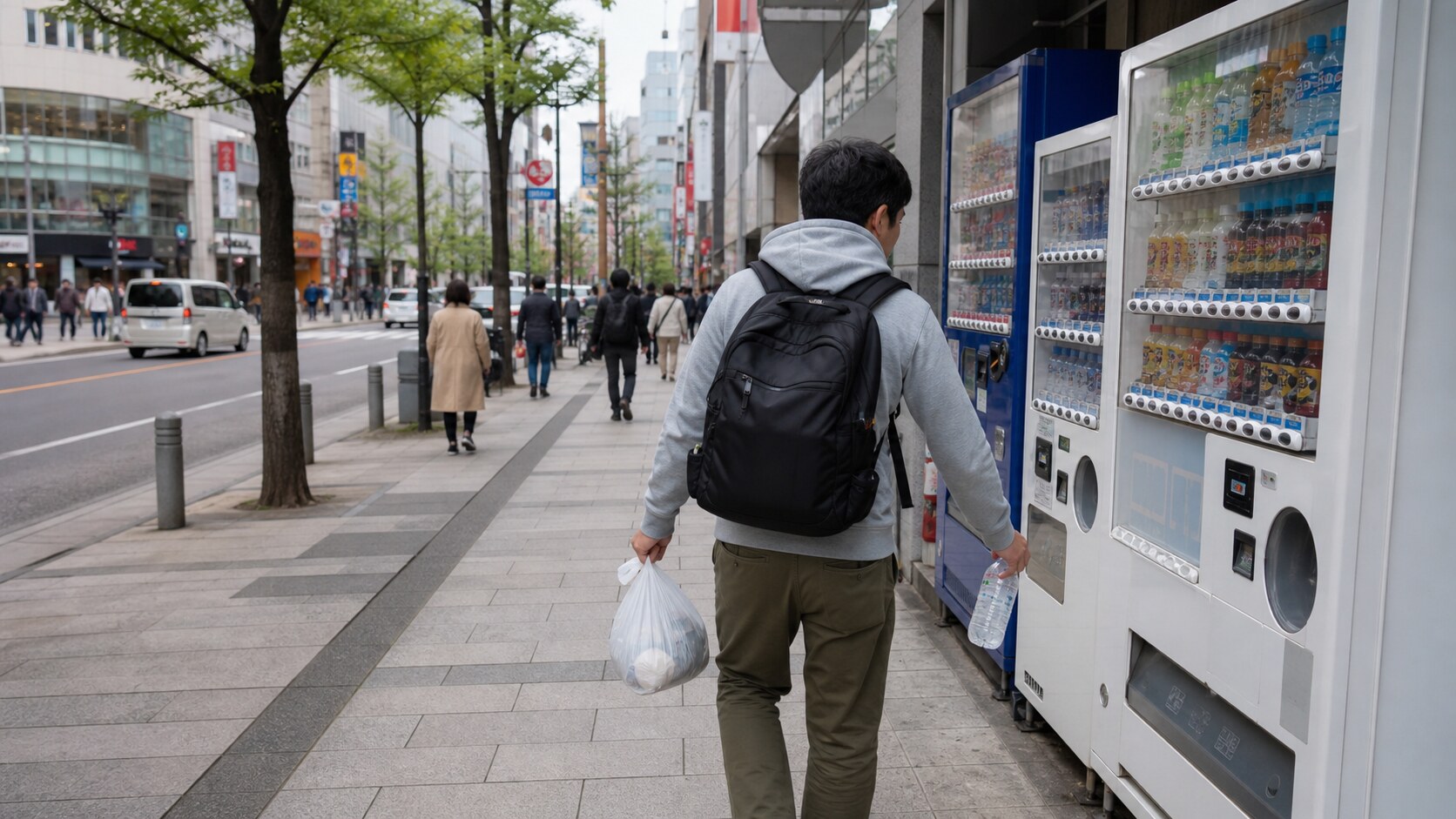
Japan’s scarcity of public trash cans is now the single most common complaint from foreign visitors — and it traces directly back to the 1995 Tokyo subway sarin gas attack, after which bins were removed from train stations and public spaces over concerns they could conceal weapons. What started as a security response became a lasting cultural norm: in Japan, you’re expected to carry your own trash until you reach a place to dispose of it properly, rather than expecting a bin on every corner.
Why they never really came back
The removal of bins after 1995 gave official shape to something already present in Japanese culture — a strong personal responsibility for one’s own waste. Trash generated at home is sorted and disposed of meticulously; trash generated while out (a coffee cup, a snack wrapper, a receipt) is treated the same way, just delayed until you’re somewhere appropriate to deal with it. The near-total absence of public bins reflects that norm as much as it reflects the original security decision.
Where to actually find a bin
- Convenience stores (konbini) — the single most reliable place to dispose of trash, generally accepting general waste from a purchase there without issue. See this site’s konbini guide for more on how these work.
- Train station platforms — some have bins, though usually restricted to bottles and cans from station vending machines rather than general trash.
- Inside the shop or stall where you bought something — many food vendors, especially at festivals and street-food stalls, have a bin at the point of purchase specifically for their own packaging.
- Vending machine areas — often paired with a recycling bin for bottles and cans specifically, not general waste.
The practical fix: carry a small bag
The standard, low-effort solution most experienced travelers land on is simply carrying a small trash or ziplock bag in a jacket pocket or daypack, and consolidating trash there until reaching a konbini or hotel. This sounds like a minor adjustment, but it removes the recurring low-grade stress of “where do I put this” that otherwise resurfaces multiple times a day in a country you’re not used to navigating.
Sorting matters more than in most countries
When you do find a disposal point, Japan’s waste sorting is more granular than in many countries — burnable, non-burnable, PET bottles, cans, and paper are frequently separated into different openings on the same bin unit. Taking a moment to check labels (often with pictures even where there’s no English) rather than defaulting to the first opening avoids the minor faux pas of visibly mis-sorting trash in front of locals who take this seriously.
FAQ: Trash cans in Japan
Why doesn’t Japan have public trash cans? Most were removed from train stations and public areas after the 1995 Tokyo subway sarin gas attack, over concerns bins could be used to conceal weapons. The scarcity has persisted since, reinforced by an existing cultural norm of personal responsibility for one’s own waste.
Where can I throw away trash while sightseeing in Japan? Convenience stores are the most reliable option. Some train station platforms and vending machine areas have limited bins, typically restricted to bottles and cans purchased there.
Is it acceptable to carry trash for hours until I find a bin? Yes — this is the normal, expected approach, not an inconvenience unique to tourists. Carrying a small bag for this purpose is standard practice even among Japanese residents.
What’s the biggest mistake tourists make with trash in Japan? Assuming a bin will appear somewhere convenient, then leaving trash in an inappropriate spot (a shrine, a park bench, a train seat) when one doesn’t. Carrying a small bag from the start avoids this entirely.