
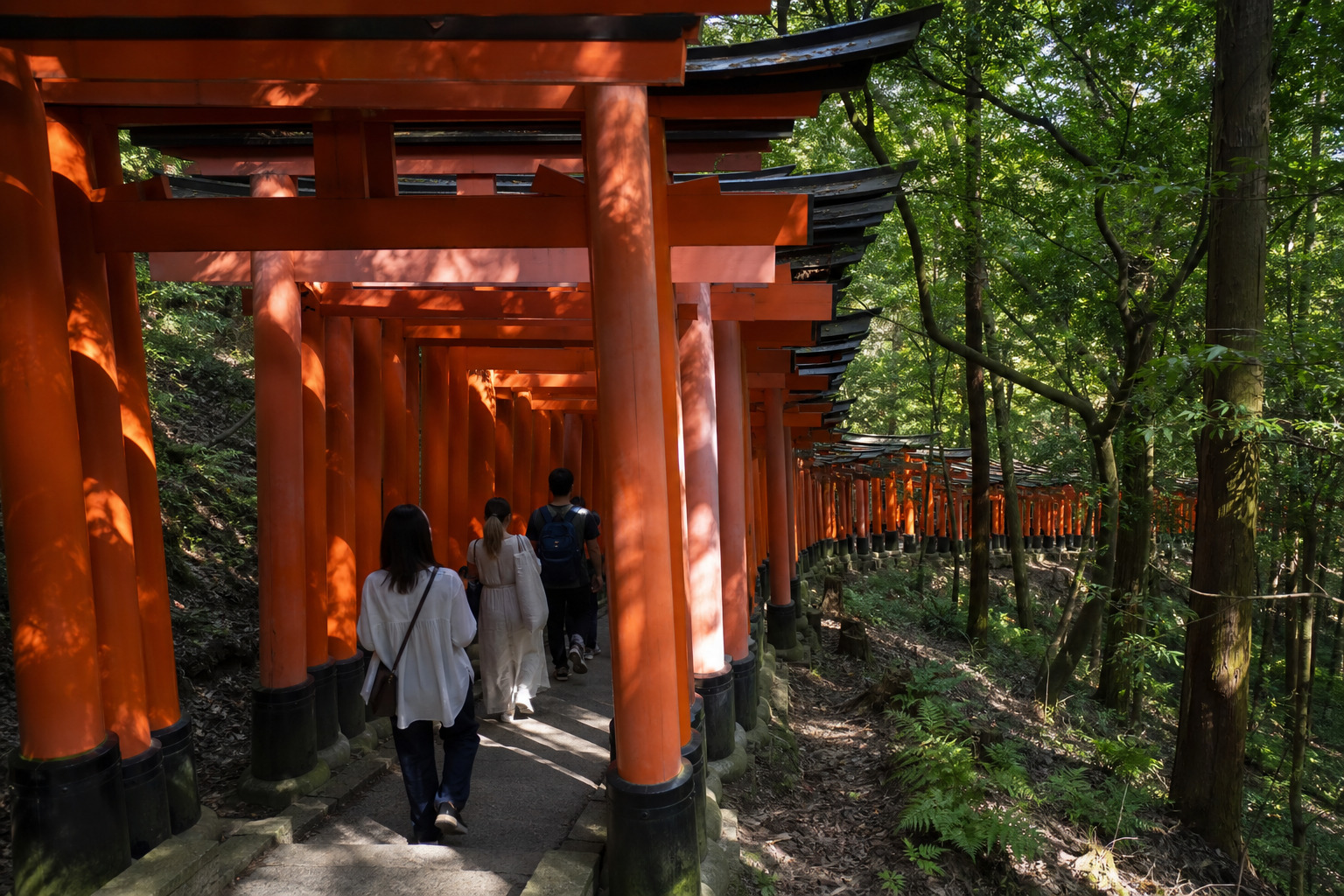
Fushimi Inari Taisha is free, open 24 hours, and the best time to visit is before 8am or after sunset — the two windows when the crowds thin out enough to actually experience the shrine rather than just photograph its entrance. The famous tunnel of roughly 10,000 vermillion torii gates climbs Mount Inari over a full 2–3 hour round-trip trail; most visitors only walk the first 5–10 minutes to the classic photo spot and turn back, which means the rest of the mountain is close to empty even at busy times of day.
Fushimi Inari is probably the single most photographed shrine in Japan, and for good reason: thousands of gates donated over centuries by businesses hoping for prosperity form an unbroken tunnel up the wooded slopes. It’s free, needs no reservation, and unlike most of Kyoto’s headline sights, it rewards showing up with a plan rather than just wandering in.
The gates aren’t the whole shrine
Picture the photo everyone else takes: a crowded tunnel of gates, a dozen strangers’ arms in frame, gone in five minutes because that’s as far as most visitors bother to walk. Now picture the same tunnel with nobody in it — because the truth is, that photo is only the entrance. Most visitors photograph the first stretch of gates and leave; the full trail up Mount Inari is a 2–3 hour round trip, passing smaller sub-shrines, stone fox statues (foxes are considered messengers of Inari, the god of rice and prosperity), and increasingly quiet stretches of forest the higher you climb.
The crowd thins out dramatically after the first viewpoint, Yotsutsuji intersection, roughly 30–40 minutes up. If your only goal is the classic “endless gates” photo, this is close enough. If you want the shrine mostly to yourself — no strangers to edit out of the frame, no shuffling line behind you — keep going.
When to go
Show up at the same time as everyone else and you get everyone else’s vacation photos in your own. Shift your visit by a few hours instead, and the exact same gates feel like a completely different place:
- Early morning (before 8am) or after sunset are the two windows locals and serious photographers actually use. The gates are lit at night and the shrine has no closing time, so an evening visit after the tour groups leave is a legitimate option
- Midday, especially on weekends, means shoulder-to-shoulder foot traffic through the lower gates — manageable, but not the peaceful mountain shrine experience the photos suggest
- The trail has no bad season: gates read well against green summer foliage, autumn color, or the gray quiet of a winter morning
Getting there
Fushimi Inari sits right next to JR Inari Station, two stops (about 5 minutes) from Kyoto Station on the JR Nara Line — genuinely one of the easiest major sights in Kyoto to reach, with no bus transfer required.
The shrine itself is free and needs no booking, but if you want it paired with a wider day out, a Nara Park, Fushimi Inari & Arashiyama day tour covers the shrine alongside Nara’s deer park and Arashiyama’s bamboo grove with a guide.
This article contains an affiliate link. If you book through it, we may earn a small commission at no extra cost to you.
Practical notes
- Cost: Free, no ticket, no reservation
- Footwear: The full mountain trail involves real stairs and uneven stone paths — sneakers, not sandals, if you’re going past Yotsutsuji
- Food: Small stalls near the base sell kitsune udon (named for the shrine’s fox association) and grilled rice crackers shaped like foxes — worth the stop on the way down
- Time needed: 30 minutes for the classic photo spot, 2–3 hours for the full summit loop
Worth the climb?
Yes, and more than most visitors realize — the postcard shot everyone takes near the entrance is really just the introduction. Push twenty minutes further than the crowd does, and Fushimi Inari turns from a photo stop into one of the more genuinely atmospheric walks in Kyoto.
FAQ: Visiting Fushimi Inari Taisha
What’s the best time to visit Fushimi Inari to avoid crowds? Before 8am or after sunset. The shrine has no closing time and the gates are lit at night, so an evening visit after tour groups leave works just as well as an early start.
How long does it take to see Fushimi Inari? About 30 minutes round-trip for the classic photo spot near the entrance, or 2–3 hours for the full summit loop past Yotsutsuji intersection.
Is Fushimi Inari free to visit? Yes — there’s no entrance fee and no reservation required, at any time of day or night.
Do I need to walk the whole trail to see the famous gates? No. The most-photographed stretch of gates is within the first 5–10 minutes of walking. Reaching Yotsutsuji intersection, about 30–40 minutes up, is enough for a quieter view with far fewer people.
How do I get to Fushimi Inari from Kyoto Station? Take the JR Nara Line two stops to JR Inari Station, about 5 minutes from Kyoto Station, with the shrine entrance directly across the street.