
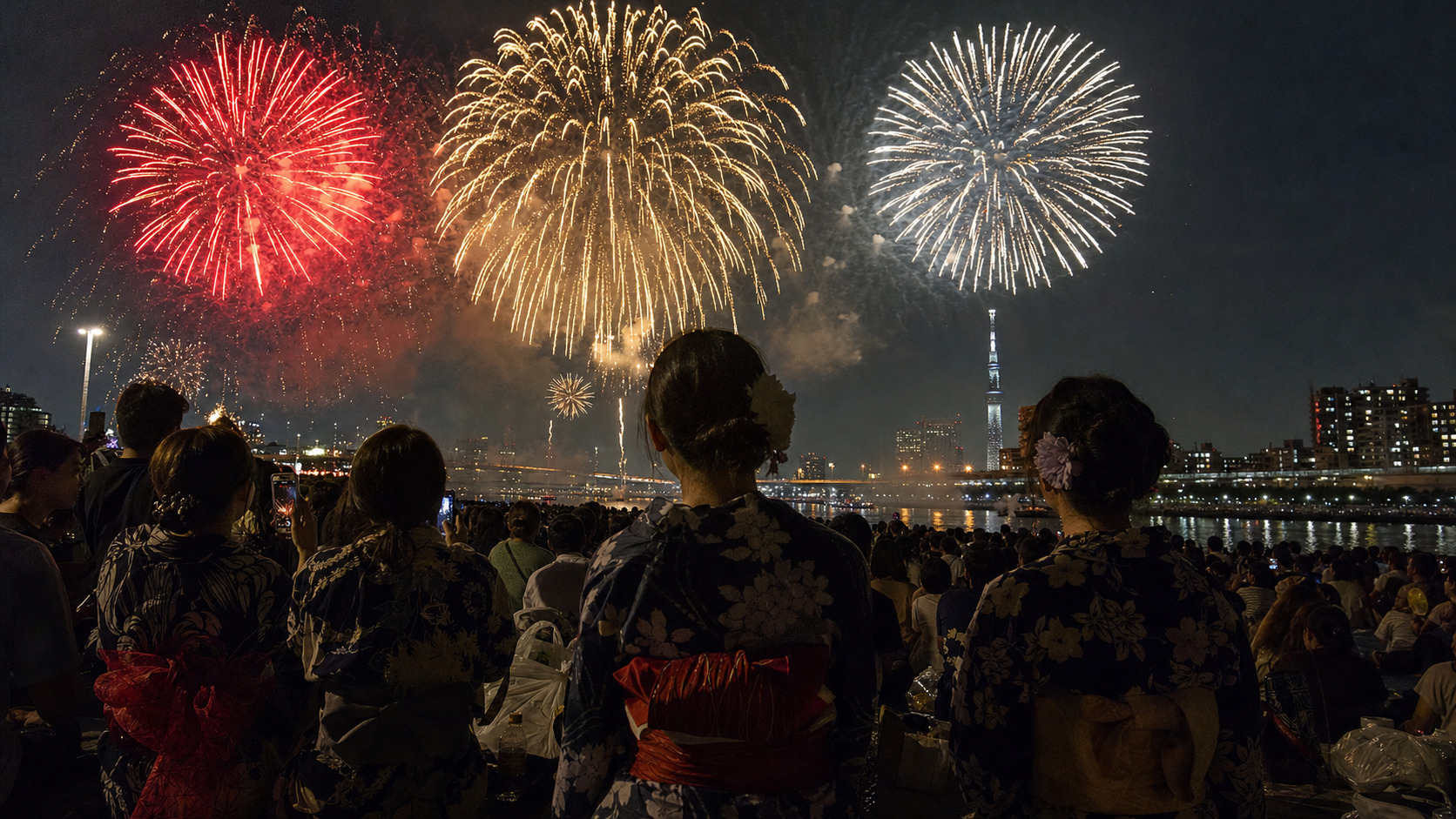
The Sumida River Fireworks Festival happens on the last Saturday of July, launches over 20,000 fireworks in under two hours, and draws close to a million spectators — the best free viewing is at Sumida Park or Chuo Ward’s riverside walkways, while a reserved river cruise or restaurant seat is the better option if you don’t want to claim ground space hours in advance. Tracing back to 1733, it’s the oldest fireworks display in Japan and, if you’re in Tokyo in late July, the single most iconic night of the season.
Every year on the last Saturday of July, the sky above Tokyo’s Sumida River fills with fireworks in a display known as 隅田川花火大会 (Sumidagawa Hanabi Taikai), still one of the biggest fireworks festivals in the country by attendance.
What makes it different from a typical fireworks show
Most fireworks shows settle into a predictable rhythm you can tune out after twenty minutes. This one doesn’t let you. Sumida River splits into two competing “venues,” each launching from a different point along the river, with dozens of pyrotechnic teams competing to outdo each other in a single evening. The result feels less like a scheduled show and more like an ongoing event — the rhythm changes, the crowd reacts audibly, and no two years look quite the same.
It’s also a genuinely local event, not something staged for visitors. Most of the crowd is Tokyoites in yukata (the light cotton kimono worn specifically for summer festivals), which is part of what makes the atmosphere along the riverbank so distinct from a typical tourist attraction.
Where to actually watch from
Where you plant yourself decides whether you spend the night craning over other people’s heads or watching the show unfold directly overhead. The two main launch points sit near Sakurabashi Bridge and Komagata Bridge, and the best public viewing spots cluster around:
- Asakusa — closest to the action, extremely crowded, but you get the full scale of the show directly overhead
- Sumida Park — a good middle ground between proximity and breathing room
- Chuo Ward’s riverside walkways further downstream — noticeably calmer, with a slightly more distant but still excellent view
None of the standing viewing areas require a ticket, but “no ticket required” also means “arrive stupidly early.” Serious spectators start claiming spots on tarps by early afternoon.
The easier way to watch it
Picture the alternative to six hours on a tarp: a reserved seat, dinner in front of you, and the entire show unfolding right over the water with no one’s shoulder blocking your view. If elbowing into a crowd for hours doesn’t sound like a vacation, that alternative is a river cruise with a reserved fireworks-viewing seat, or a rooftop/restaurant viewing package with a guaranteed unobstructed sightline. These sell out well in advance, which is really the main argument for booking one ahead of your trip rather than deciding on the day.
A 7-hour Sumida River fireworks viewing cruise covers exactly this — a reserved seat on a traditional yakatabune boat, dinner included, away from the ground-level crowd entirely.
This article contains an affiliate link. If you book through it, we may earn a small commission at no extra cost to you.
Practical notes
- Date: Last Saturday of July (moved to a backup date if there’s rain, which happens more often than you’d expect)
- Getting there: Asakusa Station (Ginza/Asakusa lines) or Tokyo Skytree Station — both get seriously congested starting a couple of hours before the show
- Getting home: This is the part people underestimate. Trains after the show are packed well beyond normal rush-hour levels. Budget an extra hour of patience, or plan to walk toward a quieter station further from the main crowd
- What to bring: A tarp or mat if you’re claiming ground-level space, cash for festival food stalls (many still don’t take cards), and a portable phone battery — everyone else is also trying to get a signal at the same time
Worth the crowds?
Yes. Sumida River isn’t the biggest fireworks festival in Japan by shell count, but it’s the one with the most history behind it, and the atmosphere — a Tokyo neighborhood in yukata, out on a summer night, watching a 300-year-old tradition — is hard to replicate anywhere else. Show up early, pick your spot deliberately, and it’s an easy highlight of a Tokyo summer trip.
If your trip falls later in the season, Bon Odori festivals offer another local summer evening you can actively join rather than only watch.
FAQ: Sumida River Fireworks Festival
When is the Sumida River Fireworks Festival? The last Saturday of July each year, moving to a backup date if there’s rain. The show runs a little under two hours.
Where’s the best place to watch the Sumida River fireworks? Asakusa is closest to the action but extremely crowded; Sumida Park offers a good middle ground; Chuo Ward’s riverside walkways further downstream are noticeably calmer with a still-excellent view.
Do I need a ticket to watch the Sumida River fireworks? No standing viewing area requires a ticket, but serious spectators claim tarp space along the riverbank by early afternoon. Reserved options like a river cruise or restaurant seat do require advance booking.
How many fireworks are launched at the Sumida River festival? Over 20,000 fireworks are launched across the two competing venues in under two hours.
How crowded does it get, and how do I get home afterward? Close to a million people attend, and trains after the show are packed well beyond normal rush-hour levels — budget an extra hour of patience or plan to walk toward a quieter station.