
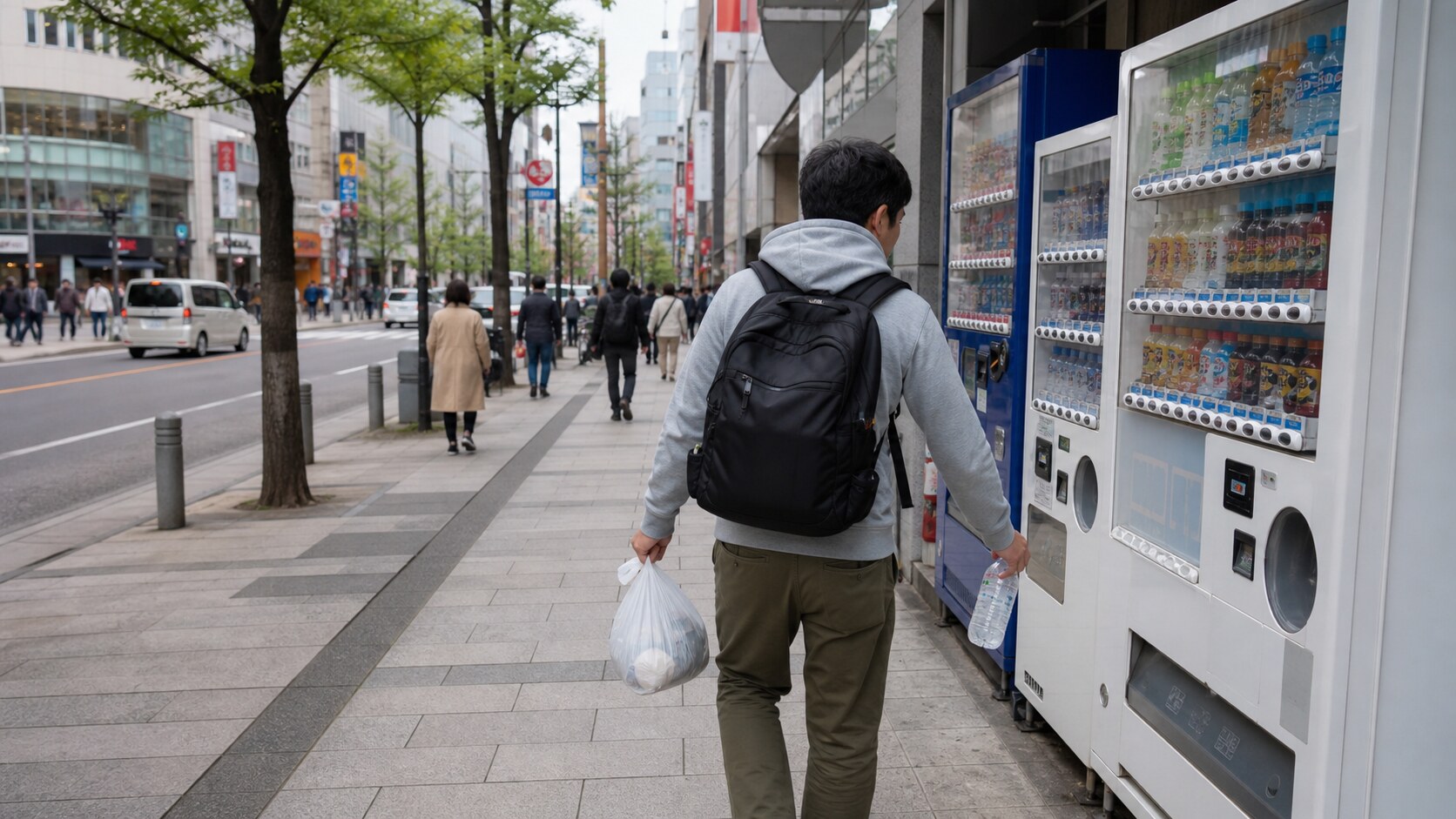
Japan’s vending machines remain common because they solve small, predictable needs in places where a staffed shop is unnecessary—not because every machine is a novelty attraction.
The first vending machine many visitors notice sells drinks. It may be beside a station, outside a convenience store, on a quiet road, or near a trail. The next machine may sell a train ticket, ramen ticket, ice cream, or a local product. These are different machines serving different jobs, so it helps to separate the everyday system from the unusual examples that appear in travel videos.
The practical reasons they fit Japan
They work in small spaces
A vending machine can serve a building entrance, station approach, workplace, park, or rural roadside without needing a full shop floor. The Japan National Tourism Organization describes beverage machines as a familiar part of travel in both cities and less urban areas. Their footprint is small, and the customer does not need to wait for a store counter to open.
The products are easy to understand
Most everyday drink machines offer a limited menu: water, tea, coffee, sports drinks, soda, or seasonal beverages. A familiar product in a fixed location is a simple purchase when you are hot, tired, or between trains. The machine does not need to explain a large menu or prepare a custom order.
They are increasingly connected to ordinary payments
Cash is still useful, but many vending machines accept an IC transit card or a smartphone payment. JNTO notes that IC cards and smartphone apps can be used at many vending machines, convenience stores, and shops. Many matters here: the payment symbols on the machine are more reliable than assuming every machine accepts your preferred method.
The location can be more important than the product
At a station, a drink machine fills a gap before the next train. At a mountain trailhead, it may be the only convenient purchase point nearby. In a neighborhood, it can be available after other shops close. The value is often access and timing, not a rare product.
Not every vending machine is a drink machine
| Type | What it usually does | What to check |
|---|---|---|
| Beverage machine | Sells cold or hot drinks | Temperature, payment marks, recycling bin nearby |
| Ticket machine | Sells a ticket or order slip | Whether the restaurant or transport operator accepts that ticket |
| Food machine | Sells a packaged, chilled, frozen, or prepared item | Storage instructions and the collection process |
| Local-product machine | Offers a regional food or small product | Opening hours, freshness, and instructions in Japanese |
Ticket machines at ramen shops are not the same as street beverage machines. If you want to understand the first type before ordering, see our ramen ticket-machine guide.
A small vocabulary for using one
You can usually complete a purchase without reading Japanese, but these words make the screen less mysterious:
| Japanese | Reading | Meaning |
|---|---|---|
| 冷たい | tsumetai | Cold |
| あたたかい | atatakai | Warm or hot |
| 売り切れ | urikire | Sold out |
| おつり | otsuri | Change |
| 取り出し口 | toridashiguchi | Pickup slot |
| 返却 | henkyaku | Return; often used around a payment or change function |
After choosing a product, check the payment area, take the item from the pickup slot, and collect your change before walking away. If the machine does not respond, do not keep inserting money; look for an operator phone number or ask nearby staff.
What about the recycling bin?
Some beverage machines have a recycling bin nearby, but it is not guaranteed and it is not a general-purpose public trash can. Japan’s limited public trash infrastructure means you should be prepared to carry other waste until you find a suitable place. Our guide to why Japan has so few public trash cans explains the practical habit of carrying a small bag.
Why the unusual machines get attention
The unusual machines—selling local snacks, prepared food, or specialty products—are memorable because they turn a familiar distribution format into a small local experience. That does not mean they represent every vending machine in Japan. Most travelers will use ordinary drink machines more often than novelty machines, especially during a hot day or a long transfer.
The often-repeated national machine counts also vary by year and by what is included in the definition. This guide avoids presenting one headline number as if it were a permanent fact. The more durable explanation is simpler: vending machines remain useful when a predictable product can be offered in a compact, low-friction location.
FAQ: Vending machines in Japan
Do Japanese vending machines accept credit cards?
Some do, and many accept IC transit cards or smartphone payments, but payment methods vary by machine. Check the icons on the machine and carry some cash as a backup.
Can I buy hot drinks from a vending machine?
Often, yes. Look for the hot/warm label and check the product button. Seasonal stock and machine settings vary, so do not assume every machine offers both temperatures.
Are vending machines in Japan available 24 hours?
The machine may be accessible at any hour, but its location can be inside a station, building, or gated area with separate opening hours. Outdoor machines are the most likely to be available late.
Can I put any trash in the bin beside a vending machine?
No. A nearby bin may be intended for bottles and cans, especially drinks purchased from that machine. Follow the labels and carry other trash until you find an appropriate disposal point.
Sources
- Japan National Tourism Organization, Japanese Vending Machines Like You’ve Never Seen
- Japan National Tourism Organization, Cashless Payments in Japan
- Japan National Tourism Organization, Top Tips for Surviving the Japanese Summer