
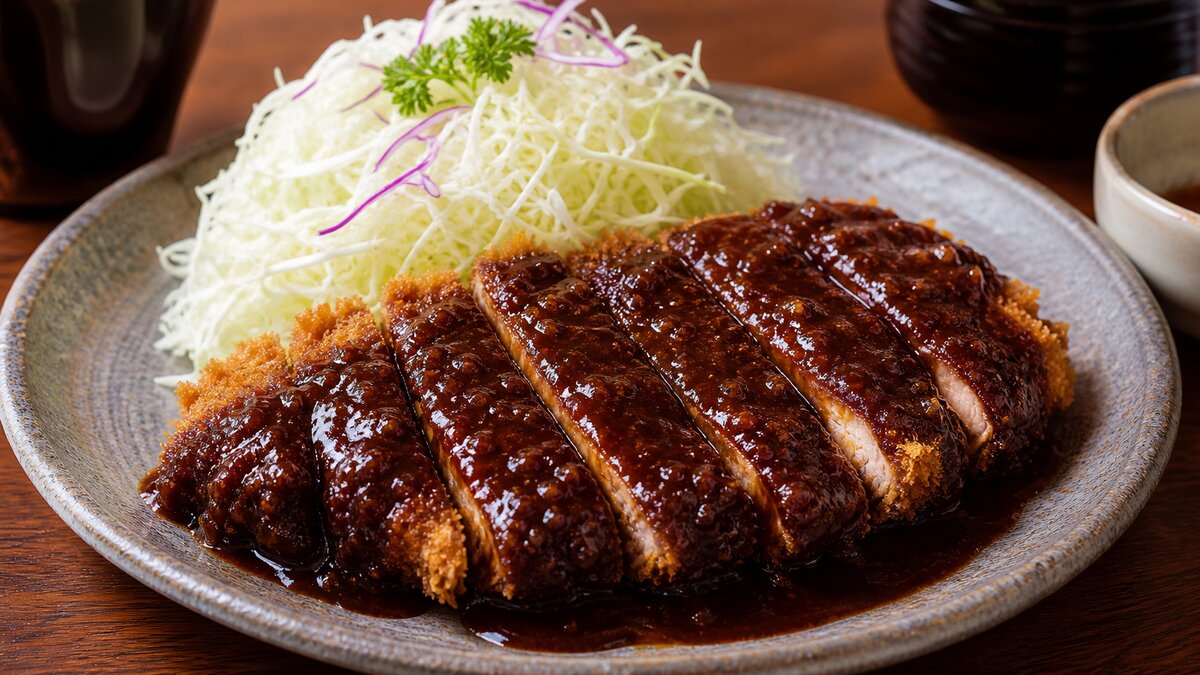
Nagoya doesn’t defer to Tokyo, Kyoto, or Osaka when it comes to food — it has its own self-contained culinary identity known locally as “Nagoya meshi,” built around a distinctive hatcho miso, a cheap local ramen chain most tourists never encounter, and a coffee-shop culture that gives you breakfast for free. Most English-language Japan travel content barely touches on it, which is exactly why it’s worth seeking out.
What “Nagoya meshi” actually means
Nagoya meshi (literally “Nagoya food”) is a real, widely used term for the region’s distinct local cuisine — not a marketing invention aimed at tourists. It’s generally credited to Kenichi Inamoto, president of the Zetton restaurant group, who coined it around 2013 when Tokyo media needed a single word to describe Nagoya’s cluster of signature dishes. The term stuck, and there’s now an official Nagoya Meshi tourism organization built around it. In local surveys, Nagoya meshi consistently ranks as the city’s top tourist draw — ahead of Nagoya Castle and Atsuta Shrine.
The reason Nagoya’s food culture feels so distinct comes down to one ingredient: hatcho miso, a dark, intensely savory soybean miso made only from soybeans and salt and aged far longer than the lighter misos used in most of Japan. Aichi Prefecture and the wider Tokai region are sometimes called the “bean miso cultural area” for this reason, and that deep, almost chocolate-toned umami shows up across dozens of local dishes — not just the ones covered below.
Beyond the three anchors in this guide, other well-documented Nagoya specialties worth knowing about include hitsumabushi (grilled eel served over rice, traditionally eaten three different ways across one meal), tebasaki (Nagoya-style fried chicken wings, seasoned and often finished with a sweet-savory glaze), and ankake spaghetti (a thick, tangy sauce over pan-fried noodles — Japanese-Western fusion food unique to the city). None of these require advance planning; they show up on menus across the city.
The three things to actually seek out
| What | What it is | Why it’s worth it | Practical note |
|---|---|---|---|
| Yabaton (矢場とん) | A pork cutlet (katsu) topped with a rich hatcho miso sauce | The most famous version of Nagoya’s signature dish, from a shop operating since 1947 | Multiple locations in the city, including inside Nagoya Station’s Esca underground mall and the Meitetsu Department Store next to the station |
| Sugakiya (寿がきや) | A budget ramen chain with a lighter pork-and-seafood broth | Distinctive noodles, an iconic spork utensil, and prices most ramen shops can’t match | Mostly found inside shopping mall food courts (Aeon, Apita) rather than standalone shops — don’t expect a sit-down restaurant |
| Komeda’s “morning” (モーニング) | Free toast and a side (egg, red bean paste) with any coffee order, before roughly 11am | A genuinely local custom, not a tourist gimmick — Nagoya-area residents build parts of their day around it | Order any drink before 11am at Komeda or most local kissaten (cafés) and the morning set comes automatically at no extra charge |
Yabaton: the miso katsu benchmark
Miso katsu — a breaded, deep-fried pork cutlet finished with a thick, glossy hatcho miso sauce — is arguably Nagoya’s single most recognizable dish, and Yabaton is the name most closely associated with it. The shop traces back to 1947, starting as a street stall in the Yaba-cho district of central Nagoya (the source of its name), and has grown into one of the most established miso katsu specialists in the city.
What makes the sauce work is time: Yabaton’s miso is fermented for around 18 months and mixed fresh daily, which is part of why the flavor reads as deep and rounded rather than just salty. The pork itself is fried to be crisp on the outside and tender inside — a texture contrast that matters as much as the sauce does.
For visitors, the easiest access point is inside or near Nagoya Station — there’s a Yabaton location in the Esca underground shopping center beneath the station, plus another in the Meitetsu Department Store next door, so it’s realistic to eat here without a special trip across town. The original Yaba-cho honten (main store) is also still open, a short walk from Yaba-cho or Kamimaezu subway stations, for anyone who wants the flagship version.
Sugakiya: the ramen you won’t find written up elsewhere
Sugakiya is a genuinely different animal from the tonkotsu and shoyu ramen most travelers already know. It started in 1946 as a sweet shop in Sakae — Nagoya’s commercial center — and added ramen to the menu two years later. Today the chain runs roughly 300 locations, concentrated in Aichi and the wider Tokai region, with most of them tucked inside shopping mall food courts (Aeon Mall, Apita) rather than standing as destination restaurants.
The broth is a “double soup” — pork bone stock blended with a lighter seafood dashi — producing something noticeably milder and sweeter than Hakata-style tonkotsu ramen. The noodles are thin and curly rather than the thicker straight noodles common elsewhere, giving the bowl a distinct mouthfeel. It’s also served with a small fork-spoon hybrid utensil designed specifically for it — a detail distinctive enough that New York’s MoMA design store has carried it.
Because Sugakiya lives inside food courts, it’s easy to combine with a mall visit or a shopping stop rather than treating it as a separate outing — and it’s one of the most inexpensive real meals available in the region, which makes it worth trying even as a quick, low-stakes detour rather than a planned pilgrimage.
Komeda and Nagoya’s “morning” culture
This is the one locals build habits around. At Komeda’s Coffee — a Nagoya-founded chain operating since 1968 — and at most independent kissaten (old-style cafés) across the region, ordering a coffee before around 11am automatically comes with a free side: usually a thick half-slice of toast, plus a topping choice like a boiled egg, egg paste, or ogura-an (sweet red bean paste, a Nagoya specialty). You don’t order the toast separately — it’s bundled into the price of the drink.
The custom is older than Komeda itself. Local accounts trace it back to 1956, to a café in Ichinomiya (a textile town near Nagoya) that started giving free boiled eggs and peanuts to mill workers who came in daily for coffee, as a small thank-you for their regular business. Nearby cafés picked up the same habit, it spread through the Chubu region, and within a few decades “morning service” had become a normal, expected part of café culture — first locally, and eventually well beyond Nagoya.
For a visitor, this means an early coffee stop in Nagoya can function as a full, essentially free breakfast — worth timing deliberately rather than treating as a coincidence. It’s a low-effort way to experience something genuinely local rather than performed for tourists, since the custom exists because residents actually use it daily.
FAQ: Eating in Nagoya
Is “Nagoya meshi” a real term, or something invented for tourism marketing? It’s real and locally used, though relatively recent — the term is generally credited to restaurant executive Kenichi Inamoto around 2013, coined to describe a cluster of dishes that already existed. It’s since been adopted by an official tourism organization and consistently ranks as Nagoya’s top-cited tourist draw in local surveys.
Do I need a reservation for Yabaton? Not necessarily, especially at the Nagoya Station branches, though lines are common around peak lunch and dinner hours given the shop’s popularity. Going slightly off peak times improves your odds of a short wait.
Is Sugakiya worth seeking out if I’m not near a shopping mall? It’s genuinely mall/food-court-centric, so it’s best treated as something to fit in around a shopping stop rather than a dedicated destination — but if you’re near an Aeon Mall or similar shopping center in the Nagoya area, it’s an easy and inexpensive detour.
What time does Komeda’s morning service end? Roughly 11am, though exact cutoff times can vary slightly by location — arriving mid-morning rather than right at opening gives you the most reliable window.
Bring the flavor home
Hatcho miso is the ingredient tying most of this together, and it’s sold outside Japan for anyone who wants to cook with it after the trip — it works well in soups, glazes, and marinades beyond just katsu sauce. Mutenka Hatcho Miso, labeled as a genuine product of Japan, is a straightforward way to try the real thing without needing to track down a specialty import shop.
This post contains affiliate links. If you buy through a link on this page, we may earn a commission at no extra cost to you. This does not affect our recommendations.